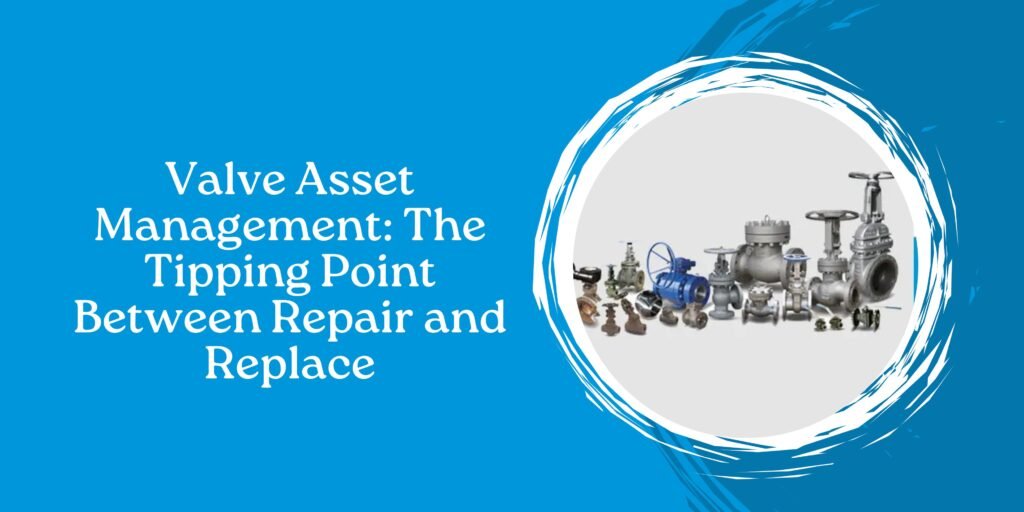
Valve Asset Management: Repair vs. Replace
In a busy production environment, your valves are the “gatekeepers” of your process. While it is standard practice to maintain and repair them during scheduled shutdowns, there is a critical moment when an older valve stops being an asset and becomes a liability.
At Metflow Engineers, we believe in helping our clients manage their assets for the long term. Here is how to evaluate your current valve inventory and decide on the best path forward.
1. The Decision Matrix: Three Key Indicators
Before you commit to a major repair or order a replacement, evaluate your valve against these three indicators:
A. The “Material Integrity” Test (Corrosion/Erosion)
- Repair: If the damage is limited to replaceable soft parts (gland packing, gaskets, or seats), a repair is usually the most economical choice.
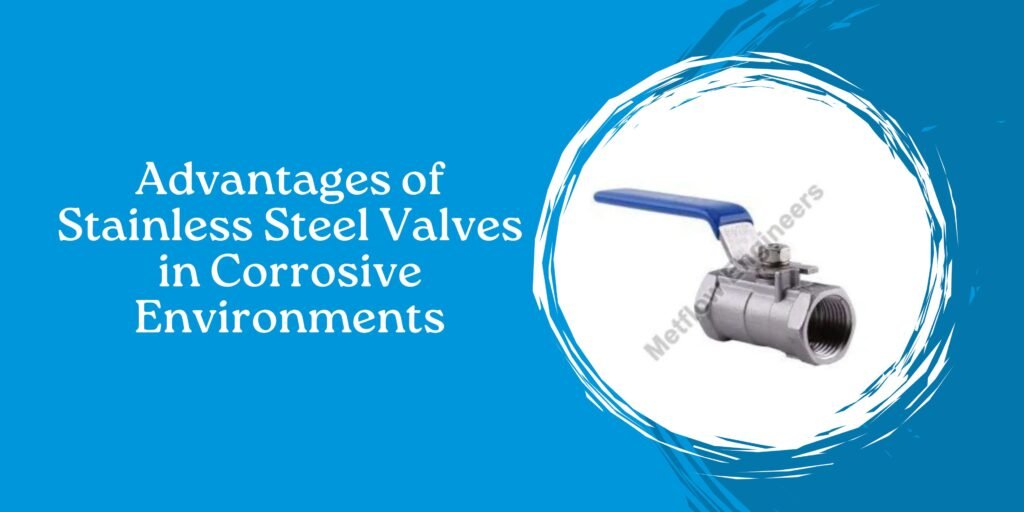
- Replace: If your Stainless Steel Gate Valve or Ball Valve body shows signs of “wall thinning” (pitting) or if the internal body seats are eroded beyond standard machining tolerances, the structural integrity is compromised. Repairing a weakened body is a temporary, high-risk solution.
B. The “Total Cost of Ownership” (TCO) Test
- Repair: If the valve is a standard item with low downtime cost, simple repair is fine.
- Replace: If you are experiencing recurring failures (e.g., the valve fails every 6 months), the “Repair” route is costing you more in labor and downtime than the cost of a new, higher-specification valve.
- Example: If you keep repairing a cast valve that fails due to high-pressure service, it is time to switch to a Forged Steel Valve that is built for that specific duty.
- Link: The Superior Strength: Why Forged Valves Are Essential
C. The “Technology Obsolescence” Test
- Replace: Has your process changed? If you’ve upgraded your pumps or increased your system pressure, your older valves may no longer meet current safety standards (e.g., API 602 or ASME B16.34). Retrofitting an obsolete valve is often more expensive than buying a modern, compliant replacement.
2. Strategic Retrofitting: A Middle Ground
Sometimes, you don’t need a whole new valve, but you do need an upgrade.
- Seal Upgrades: Upgrading from standard packing to high-performance graphite or low-emission PTFE packing can turn a “leaky” valve into a compliant one, helping you meet environmental standards without replacing the body.
- Material Upgrades: If your Y-Type Strainer or valve internals are failing, upgrading the internals to SS 316 can drastically extend the time between maintenance cycles.
3. When to Partner with Metflow Engineers
Choosing the right path requires accurate data. Our technical team can help you:
- Audit your inventory: Identify which valves are at the end of their service life.
- Improve specifications: If your current valves are failing, we don’t just sell you the same one again—we help you select a design or material (like Forged vs. Cast) that solves the root cause of the failure.
- Ensure compliance: We ensure all replacement valves meet the latest safety and pressure-temperature ratings required by your plant’s standards.
Conclusion: Move from Reactive to Proactive
Don’t wait for a “silent killer” (like cavitation or corrosion) to cause an emergency shutdown. By assessing your valve assets during every planned turnaround, you can proactively replace high-risk valves and schedule the repair of low-risk ones.
Need an expert assessment of your valve inventory?
Contact the Metflow Engineers team. Whether you need a direct replacement or a higher-performance upgrade to solve recurring issues, we are here to ensure your plant operates with total confidence.