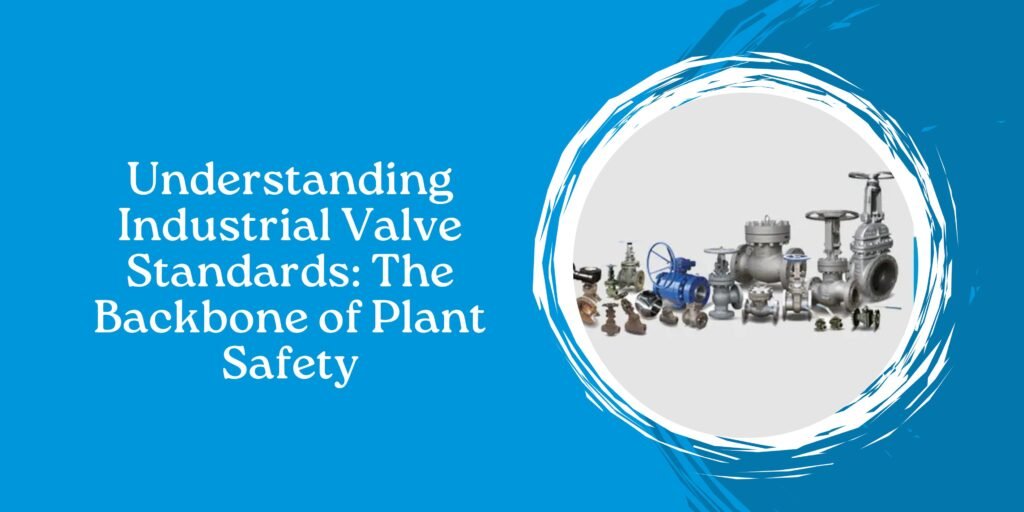
Industrial Valve Standards: Why They Matter for Plant Safety
When you purchase a valve for a high-pressure manifold or a critical chemical line, you aren’t just buying metal—you are buying a performance guarantee.
How do you know that a valve rated for “Class 800” can actually handle the pressure? How do you ensure that two valves from different batches will fit the same flange pattern? You rely on Global Standards.
At Metflow Engineers, we don’t just build valves; we build them to comply with the international benchmarks that keep your plant safe and your processes predictable.
1. The Big Three Standards Explained
A. ASME (American Society of Mechanical Engineers)
ASME sets the “Rules of the Road” for design and pressure.
- ASME B16.34: This is the most critical standard for valves. It defines the Pressure-Temperature Ratings. It tells you exactly how much pressure a valve can handle at 100°F versus 800°F.
- Why it matters: It ensures that if you specify a valve for a high-pressure line, the valve wall thickness and material properties are calculated correctly to prevent rupture.
B. API (American Petroleum Institute)
API standards are tailored for the demanding Oil, Gas, and Petrochemical sectors.
- API 602: The gold standard for compact, steel gate, globe, and check valves. If you are buying Forged Gate Valves or Forged Check Valves for a refinery, this is the specification that guarantees their performance.
- API 598: Covers valve inspection and testing. It ensures that every valve undergoes rigorous hydrostatic and seat-leakage tests before it leaves the factory.
C. ISO (International Organization for Standardization)
ISO focuses on the process of manufacturing.
- ISO 9001-2015: This certifies that we have a consistent Quality Management System. It isn’t about the valve’s design; it’s about the company’s reliability. It guarantees that every valve you order is built to the exact same high-quality standard as the last one.
2. Why Standards = Interoperability & Safety
Standardization isn’t just “red tape”—it’s what allows your plant to run efficiently:
- Interchangeability: Thanks to standard flange dimensions (ASME B16.5), you can replace a faulty valve from Manufacturer A with a valve from Metflow Engineers without needing to re-pipe the entire line.
- Predictability: When a valve is built to API standards, your maintenance team knows exactly what to expect when they open the bonnet for inspection.
- Risk Reduction: Compliance is your best protection against liability. Using non-compliant components in a hazardous process line is a gamble no facility manager should take.
3. The Metflow Advantage: Compliance by Design
We don’t just “meet” standards; we use them to guide our manufacturing:
- PMI (Positive Material Identification): Ensuring the alloy (SS316, WCB) actually matches the spec.
- Testing: Every Ball, Gate, or Check Valve we produce is tested according to international protocols to ensure the seat and body seals hold under pressure.
- Documentation: We provide the MTRs (Material Test Reports) and test certificates you need to prove compliance to your auditors and safety inspectors.
Conclusion: Trust the Standards
When selecting your flow control partners, ensure they speak the language of standards. Whether you need an API-compliant Forged Ball Valve for a gas line or an ISO-certified Stainless Steel Globe Valve for a chemical process, you need a partner who values certification as much as you value safety.
Do you have an upcoming project requiring specific API or ASME certification?
The Metflow Engineers technical team is well-versed in global standards. Contact us today to discuss your project specifications and ensure your flow control infrastructure meets the highest international benchmarks.