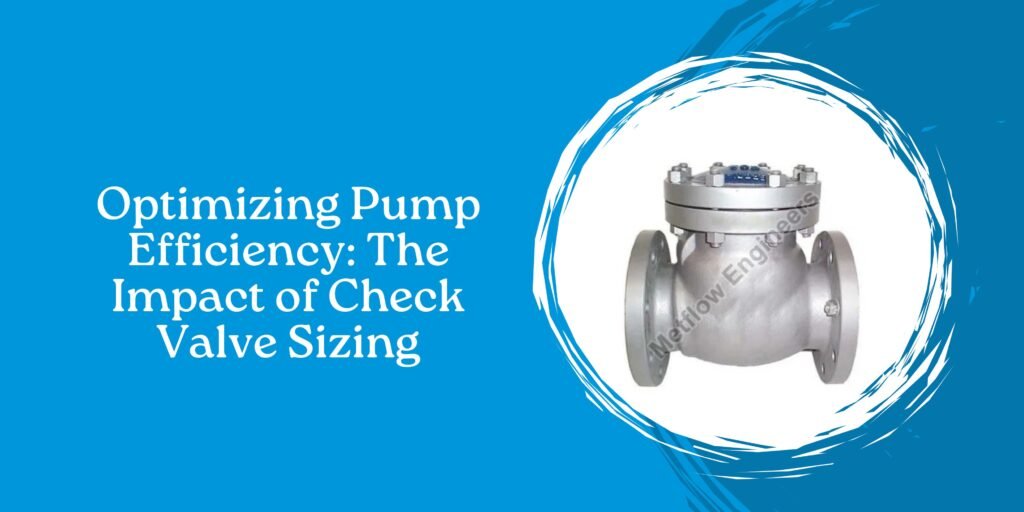
Optimizing Pump Efficiency: The Impact of Check Valve Sizing
In an industrial piping system, every component adds resistance—known as Pressure Drop (ΔP). When it comes to the discharge side of a pump, the Check Valve is the primary culprit for resistance. If your valve is oversized, it may chatter and fail; if it is undersized, it creates a massive flow restriction that forces your pump to work overtime, driving up your electricity bills.
At Metflow Engineers, we help clients move beyond “standard” sizing to achieve true system efficiency.
1. The Energy Penalty of High Head Loss
Check valves operate by using the energy of the flowing fluid to hold the valve open. If the valve is not fully open during operation, it creates a “bottleneck.”
- The Result: Your pump must exert more pressure (Head) to push the fluid through.
- The Cost: Extra pressure equals extra power consumption. Over a year of 24/7 operation, a high-resistance check valve can cost thousands in unnecessary energy expenses.
2. Choosing the Right Type for Your Pump
Matching the valve type to the flow profile is critical for efficiency:
- Swing Check Valves: Best for large-bore, horizontal flow lines. They offer low pressure drop when fully open but can be prone to “slamming” if the closure isn’t timed correctly.
- Dual Plate Check Valves: Excellent for compact piping arrangements. Because they have two lighter, spring-loaded plates, they react faster to flow reversal, which reduces water hammer—the enemy of pump longevity.
- Non-Slam/Silent Check Valves: These are the gold standard for high-head pumping stations. They are spring-loaded to close before flow reversal occurs, protecting your pump from the shock of backflow.
3. The Sizing Golden Rule: Flow Velocity
Sizing a check valve isn’t just about matching the pipe diameter. It’s about Flow Velocity.
- If the velocity is too low, the valve disc may oscillate (“chatter”), leading to rapid wear of the hinge pin and seat.
- If the velocity is too high, the pressure drop increases exponentially.
- The Solution: Use the valve’s Cv (Flow Coefficient) data. At Metflow, we provide Cv ratings for all our check valves, allowing your engineering team to calculate the exact pressure drop at your expected flow rate.
4. Protecting Your Asset: The “Water Hammer” Factor
Efficiency isn’t just about saving electricity; it’s about preventing catastrophic pump damage. When a pump shuts down, the fluid reverses. A poorly chosen check valve slams shut, sending a pressure shockwave (Water Hammer) back into the pump casing. This can crack pump impellers and damage seals. Choosing a valve with a proper closing characteristic is the cheapest insurance policy you can buy for your pump.
Conclusion: Efficiency Starts with Engineering
Don’t let a suboptimal check valve undermine the performance of your high-efficiency pumps. By carefully analyzing your flow rates and selecting the right valve geometry, you can reduce your energy consumption and ensure your pumping station runs reliably for years to come.
Is your pump system showing signs of high energy use or mysterious pressure surges? The Metflow Engineers technical team can analyze your flow conditions and recommend the optimal check valve configuration to minimize pressure drop and protect your equipment.