Preventing Premature Valve Failure: The Three “Silent Killers”
A single valve failure in a chemical plant, refinery, or power facility is rarely “just a maintenance issue.” It is a production stoppage, a safety hazard, and a significant cost. However, most failures are preventable if you understand the root cause.
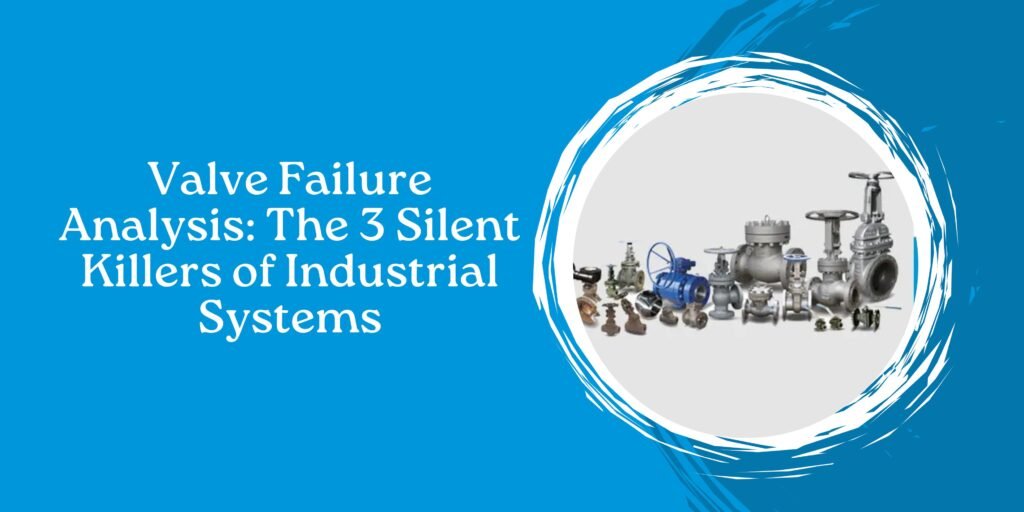
At Metflow Engineers, we have analyzed countless valves returned for repair. Time and again, the diagnosis points to one of three “silent killers.”
1. Cavitation: The Invisible Destroyer
Cavitation occurs when localized pressure inside a valve drops below the liquid’s vapor pressure, causing vapor bubbles to form. When the pressure recovers downstream, these bubbles collapse violently.
- The Symptom: You will hear a sound like “gravel” flowing through the pipe, accompanied by intense vibration.
- The Damage: These implosions generate micro-jets of energy (up to 1 GPa) that physically rip material off your valve trim and body.
- The Fix:
- Globe Valve Sizing: Use Stainless Steel WCB Globe Valves properly sized for the pressure drop.
- Multi-Stage Trim: For extreme pressure drops, consider anti-cavitation trim designs that dissipate energy before the bubbles can collapse.
2. Erosion: The Abrasive Scour
Erosion is the physical removal of material caused by high-velocity fluid, especially when that fluid carries suspended solids (slurry, pulp, or grit).
- The Symptom: Uniform thinning of the valve walls or deep “grooving” in the valve seat and gate faces.
- The Damage: Abrasive media wears down even the hardest metals, leading to internal leakage that gradually widens until the valve can no longer provide a tight shut-off.
- The Fix:
- Knife Edge Gate Valves: In slurry and pulp applications, our Knife Edge Gate Valves are engineered to “shear” through debris, reducing the time particles spend scouring the seat.
- Link: How Knife Edge Gate Valves Improve Slurry Handling
3. Corrosion: The Chemical Breach
Corrosion is a chemical attack on the valve metal, often accelerated by temperature and the specific chemistry of your process media.
- The Symptom: Pitting (small, deep holes), “crevice corrosion” at flange joints, or uniform rusting.
- The Damage: Pitting can lead to through-wall penetration, creating a “pinhole” leak that is dangerous and difficult to contain.
- The Fix:
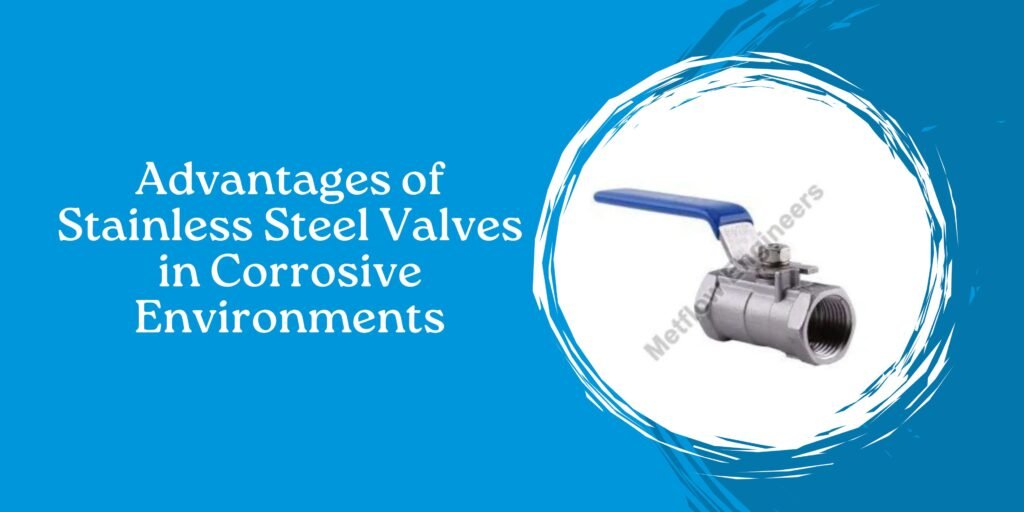
- Material Selection: You must match the alloy to the media. If you are handling chlorides, SS 316 is mandatory to prevent pitting. For extreme high-pressure/high-temp, Forged Steel offers a denser, more corrosion-resistant grain structure.
- Link: WCB vs SS 304 vs SS 316: Selecting Valve Material
Diagnostic Quick-Check: Is Your Valve at Risk?
| If you see… | Suspect… | Immediate Action |
|---|---|---|
| “Gravel-like” noise / Vibration | Cavitation | Review pressure drop data & valve sizing. |
| Deep grooves in the seat/gate | Erosion | Check fluid velocity & particulate content. |
| Discoloration / Deep pits | Corrosion | Perform a chemical compatibility check (PMI). |
Metflow Engineers: A Consultative Approach
We believe that providing a valve is only the first step. By analyzing the environment in which our valves operate, we help you choose the right design—whether it’s a Forged Check Valve for high-pressure durability or a Stainless Steel Industrial Gate Valve for chemical resistance—to ensure your systems stay online.
Are you seeing signs of premature wear in your piping system?
Don’t wait for a total system failure. Contact the Metflow Engineers technical team today for a Valve Health Consultation. We can analyze your service conditions and recommend the exact material and design to eliminate your failure risks.