In any pipeline system, a valve is only as durable as the media it controls. Unseen contaminants—such as rust, pipe scale, welding debris, and particulate matter—are responsible for the premature failure of expensive flow control components. They erode valve seats, score discs, and clog small internal passages.
The solution is simple, effective, and economical: the installation of Strainers and Filters.
At Metflow Engineers, our range of strainers is designed to capture damaging solids, ensuring the longevity and reliable performance of your primary valves (like Ball, Globe, and Check Valves). This guide covers the function and application of our most popular strainer types.
1. Why Valve Protection is Non-Negotiable
A clean fluid stream is crucial for valve reliability. Damage caused by debris includes:
- Seat and Seal Erosion: Particulates embedding themselves in soft seats or scratching metal seating surfaces, leading to leakage and loss of tight shut-off.
- Check Valve Failure: Debris lodging under the disc of a Dual Plate Check Valve or Swing Check Valve, preventing it from fully closing and risking dangerous backflow.
- Clogging: Fine mesh strainers protect instrumentation and small components by preventing solid accumulation.
2. Types of Strainers and Their Applications
Choosing the right strainer depends on the flow rate, media cleanliness, and the need for continuous operation.
A. Y Type Strainers: The Versatile and Compact Choice
The Y Type Strainer is named for its ‘Y’ shape, where the filter element (or screen) is housed in a slanted chamber.
- Pros: Compact, ideal for high-pressure applications (the shape helps withstand pressure), and can often be installed horizontally or vertically.
- Cons: Requires the line to be shut down for cleaning (blow-off connection can reduce this need).
- Best For: Steam, gas, air, and liquid lines with low solid content.
Internal Linking Point: Our Water SS 304 Y Type Strainer is a popular choice for general water service.
B. T Type Strainers: High Capacity, Permanent Installation
The T Type Strainer is fabricated for high-capacity dirt retention. The chamber (or basket) extends perpendicularly from the main flow, offering a large collection area.
- Pros: High solid-holding capacity, robust design suitable for large pipelines.
- Cons: Physically larger than a Y-strainer; requires more space.
- Best For: Applications with moderate to high particulate matter and larger pipeline sizes.
C. Simplex and Duplex Strainers: The Continuous Solution
Simplex Strainers are single-basket units similar to T-Strainers but primarily used where temporary shutdown for cleaning is acceptable.
Duplex Strainers are the definitive solution for continuous processes. They consist of two basket chambers and a diverting valve (usually a Ball Valve or Plug Valve).
- Pros (Duplex): Allows one chamber to be cleaned while the process flow is diverted to the second chamber, ensuring zero downtime.
- Best For: Critical processes in Petrochemicals, Power Plants, and Refineries where the line must not be shut down (e.g., cooling water, lube oil).
Internal Linking Point: Explore our Simplex & Duplex Type Strainers engineered for critical, non-stop operations.
3. Specialty Filters and Temporary Solutions
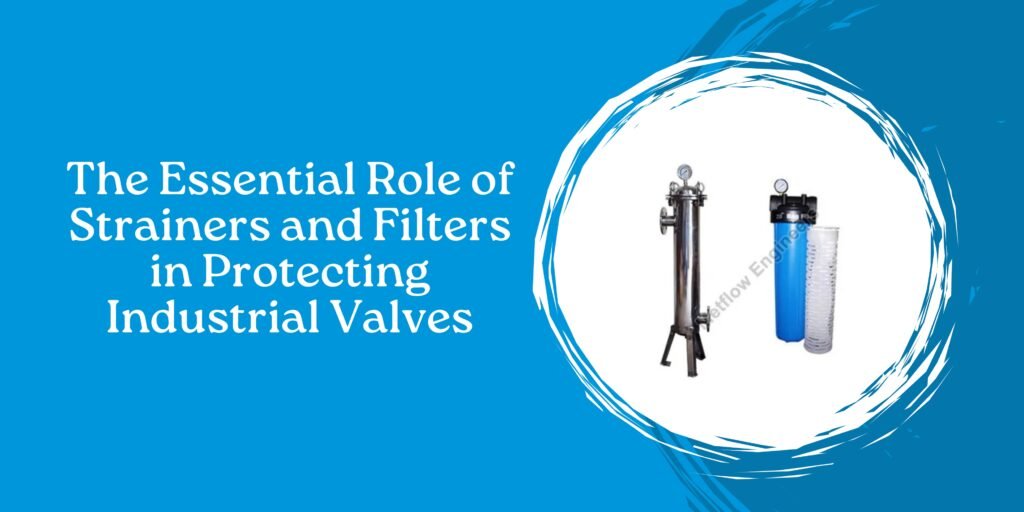
- Bag Filters: Used where extremely fine particulate removal is required (often down to 1 micron), offering a high flow rate and easy-to-change filter media.
- Temporary Strainers: Installed between flanges during initial system startup (e.g., after construction or modification) to capture debris like welding beads and construction materials before they reach sensitive equipment. They are typically removed after the system is flushed.
Conclusion: A Small Investment, A Major Return
Strainers are an essential line of defense. By capturing contamination upstream, they significantly reduce the wear on your major industrial valves, minimizing maintenance costs, eliminating unscheduled downtime, and guaranteeing the long-term reliability of your entire flow system.
Is your system protected against hidden debris?
Contact the Metflow Engineers team today to specify the correct Strainer and Filter solution to safeguard your investment in flow control technology.