The handling of cryogenic fluids—substances with boiling points below -150°C (e.g., Liquid Natural Gas or LNG, Liquid Oxygen, Liquid Nitrogen)—presents one of the biggest challenges in industrial flow control. Standard valves cannot withstand the extreme cold, leading to material failure, stem freezing, and leaks.
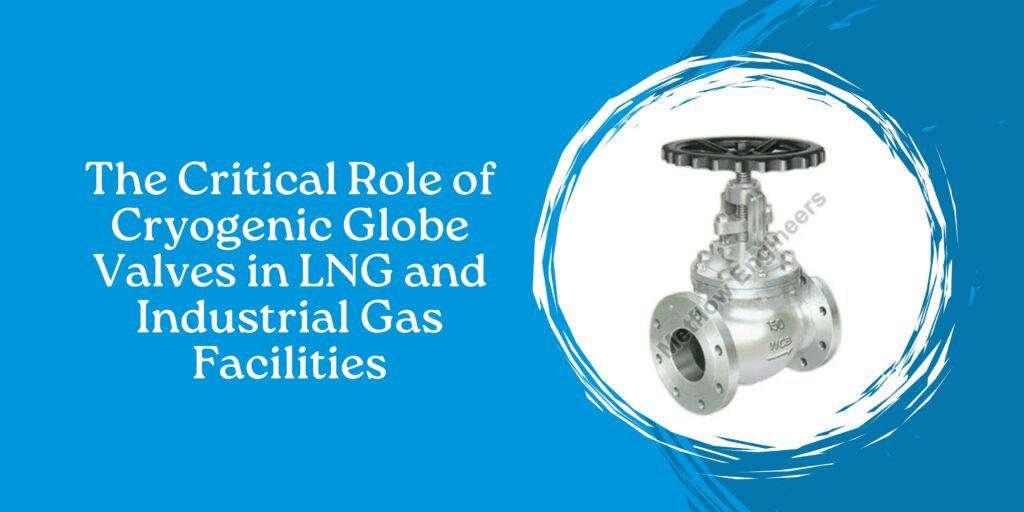
The solution is the Cryogenic Globe Valve. Specifically designed to operate reliably in these ultra-low temperature environments, it is essential for safety, efficiency, and precise flow regulation in the industrial gas and petrochemical sectors.
At Metflow Engineers, we specialize in manufacturing Stainless Steel Long Stem Cryogenic Globe Valves built to maintain integrity and function when it matters most.
1. Why Standard Valves Fail in Cryogenic Service
A conventional valve fails quickly in cryogenic service for three main reasons:
- Material Embrittlement: Carbon steel and many common materials become brittle and fracture under extreme cold.
- Thermal Contraction: Different components contract at different rates, leading to loss of seating pressure and leakage.
- Stem Freezing: Ice formation can bind the stem, preventing operation and leading to packing failure.
2. Design Features of a Cryogenic Globe Valve
The Globe Valve design is inherently suited for flow regulation (throttling), which is often required in cryogenic systems to manage pressure and vaporization rates. However, specialized modifications are critical:
A. The Extended Bonnet (Long Stem)
This is the most defining feature. The bonnet, which houses the stem packing, is significantly extended away from the valve body and the super-cooled fluid.
- Purpose: The long stem separates the critical stem packing from the low-temperature fluid. This ensures the packing remains warm enough (ideally above 0°C) to retain its elasticity and seal integrity, preventing ice formation and leakage to the atmosphere.
Internal Linking Point: Our Stainless Steel Long Stem Cryogenic Globe Valve utilizes this design to maximize packing life.
B. Material Selection: Austenitic Stainless Steel
To prevent material embrittlement, cryogenic valves must be constructed from metals that retain toughness at low temperatures.
- Preferred Material: Stainless Steel grades (like SS 304 and SS 316) are selected because their austenitic microstructure prevents the phase change that causes brittleness in carbon steel.
C. Seat and Disc Design
Cryogenic Globe Valves often use soft seats (e.g., PTFE or PCTFE) to achieve a bubble-tight seal even under severe thermal cycling. The disc is often guided to ensure perfect alignment during throttling.
3. Key Applications and Importance
Cryogenic Globe Valves are fundamental components in systems where precise throttling and safe isolation of liquefied gases are necessary.
| Industry | Application | Function |
|---|---|---|
| LNG | Loading/Unloading Terminals, Liquefaction Plants | Precise control of liquefied methane flow and pressure. |
| Industrial Gas | Air Separation Units (ASU), Storage Tanks | Regulation of Liquid Nitrogen (LN2), Liquid Oxygen (LOX), and Liquid Argon delivery. |
| Aerospace/Research | Test Rigs, Propellant Lines | Safe handling and isolation of super-cooled propellants. |
4. Metflow Engineers’ Quality and Reliability
As an ISO 9001:2015 certified valves manufacturer, every Cryogenic Globe Valve from Metflow Engineers undergoes rigorous testing to validate its performance under expected operating conditions.
We ensure that all welds, materials, and extended bonnets comply with international standards, offering you a valve that promises reliable flow control and uncompromised safety in extreme cold environments.
Is your current valve infrastructure ready for the demands of ultra-low temperature service?
Contact the Metflow Engineers technical team today to specify the right cryogenic solution for your LNG or industrial gas application.