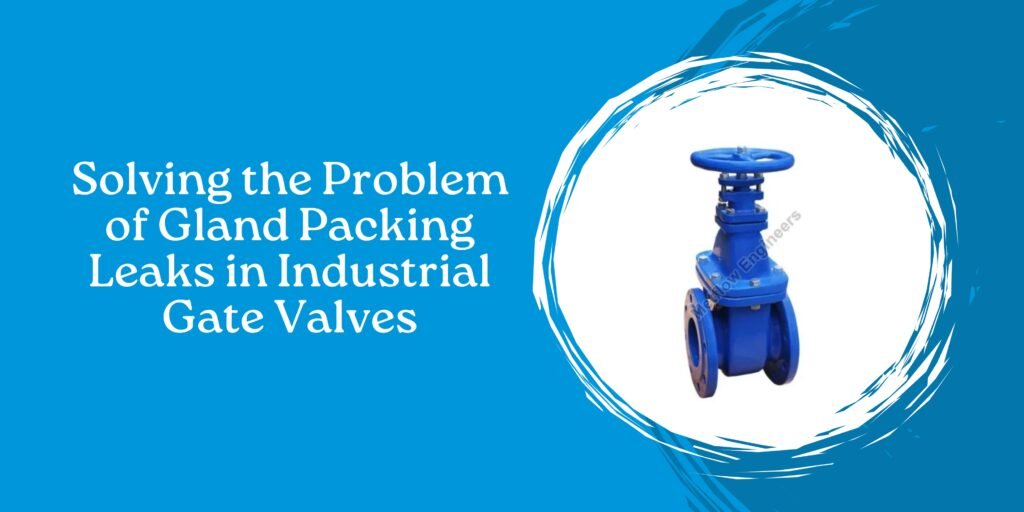
For linear motion valves like the Gate Valve, the most common source of external leakage is the gland packing — the soft sealing material compressed around the valve stem. These leaks are not just a nuisance; they lead to lost product, increased utility costs, and potential safety hazards from fugitive emissions.
While gate valves are essential for reliable isolation, their repeated linear stem movement subjects the packing material to constant friction and wear.
At Metflow Engineers, we engineer our Stainless Steel Gate Valves and Cast Steel Gate Valves with high-integrity packing systems. However, even the best systems require proper maintenance. This guide outlines the main causes of packing failure and provides proven solutions for ensuring a long-lasting, tight seal.
1. Understanding the Gland Packing System
The gland packing system consists of several rings of material (often PTFE, Graphite, or a fiber composite) compressed by the gland follower and held in place by the gland bolts. The friction created by this compression forms a seal against the valve stem.
When this compression fails, the stem seal breaks, resulting in leakage.
2. Root Causes of Gland Packing Failure
Engineers often jump to replace the packing, but the failure usually stems from one of these issues:
A. Improper Torque (The Number One Cause)
- Over-Tightening: Applying too much torque crushes the packing material, causing it to lose elasticity and wear down the stem surface quickly. This is counter-intuitive but often leads to faster leaks.
- Under-Tightening: Too little torque results in insufficient compression, allowing fluid to weep out immediately.
B. Thermal Cycling and Shock
- Cause: When the valve’s temperature rapidly increases or decreases (e.g., in steam service), the different expansion rates of the metal stem, metal body, and packing material cause the packing seal to loosen and relax.
- Effect: This relaxation causes the seal to fail, requiring frequent re-tightening.
C. Stem Condition
- Pitting/Scoring: Any minor damage, scratch, or pit on the stem surface acts as a leak path. Once damaged, even new packing cannot form a reliable seal.
3. Maintenance Best Practices for Gate Valve Gland Packing
A proactive approach minimizes downtime and prevents catastrophic failure.
A. The Quarter-Turn Tightening Strategy
If minor weeping is detected, do not tighten excessively.
- Tighten each gland bolt a quarter of a turn at a time.
- Tighten bolts sequentially in a cross-pattern (like tightening a tire lug nut) to ensure even compression.
- Operate the valve once or twice. If the leak persists, repeat the quarter-turn adjustment.
B. Use Certified and Correct Packing Material
Always use packing material specified for the media, pressure, and temperature. For high-pressure steam, flexible graphite is often preferred; for general chemical service, PTFE is common. Using sub-standard material guarantees early failure.
C. Regular Stem Cleaning and Inspection
- During routine maintenance, inspect the portion of the stem that enters the packing box for any signs of scoring or corrosion.
- If replacing the packing, clean the packing box thoroughly and ensure each ring of packing material is seated squarely before the next one is added.
4. Metflow Engineers: Engineered for a Tighter Seal
Our commitment to quality, verified by ISO 9001-2015 certification, ensures our Forged Gate Valves and Stainless Steel Gate Valves are manufactured with precision-machined stems and packing boxes. This precision minimizes the gaps that allow leakage, ensuring the packing material can perform its function effectively.
By following these maintenance best practices and utilizing high-quality, precision-engineered valves, you can drastically reduce fugitive emissions, lower your operational costs, and secure the integrity of your pipeline systems.
Need a durable, high-integrity Gate Valve or specialized packing solution?
Contact the Metflow Engineers technical team today for guidance on maximizing your valve lifespan and safety.