The production process in a Paper and Pulp mill is a relentless test for industrial valves. From the digester to the bleaching and finishing stages, valves must handle a destructive cocktail of high-consistency wood fiber slurries, viscous lime mud, highly abrasive tailings, and corrosive chemicals like chlorine and caustic soda.
Standard industrial valves rapidly fail in this service due to two main issues: abrasion/clogging and chemical corrosion.
At Metflow Engineers, we manufacture specialized valves designed to meet the extreme demands of this sector, primarily relying on the robustness of the Knife Edge Gate Valve and the corrosion resistance of Stainless Steel components.
1. The Slurry Solution: Knife Edge Gate Valves
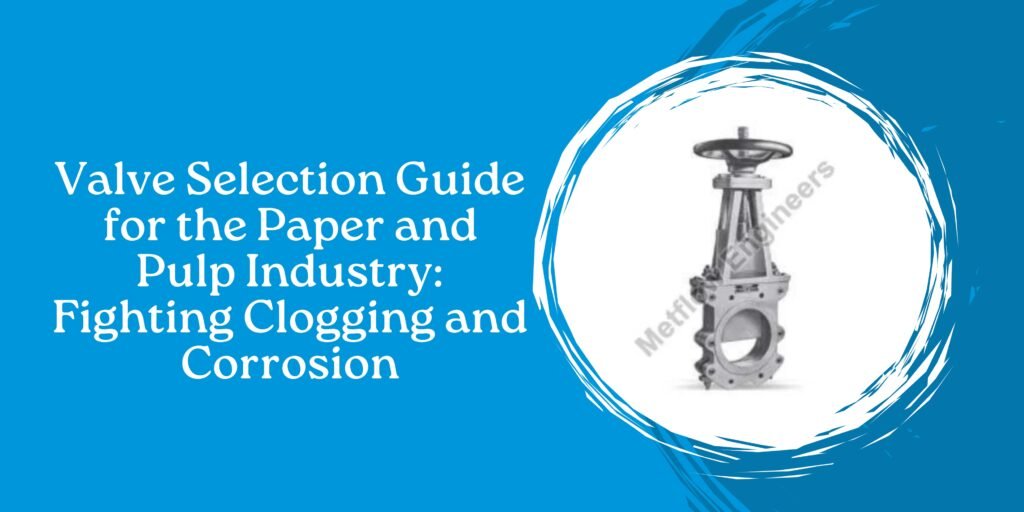
For isolation duty in lines carrying pulp, wood chips, and thick slurries, the Knife Edge Gate Valve (KEGV) is the only reliable choice. It’s engineered specifically to overcome clogging.
Key Advantages for Pulp Service:
- Shearing Action: The signature knife-edge on the bottom of the gate is designed to slice through fibrous material and solids as it closes, ensuring a complete shut-off even when debris is present in the line.
- Non-Clogging Body: Unlike conventional Gate Valves, the KEGV has a minimal bonnet cavity and a smooth internal flow path, preventing solids and pulp from accumulating and hardening above the gate.
- Metflow Products: We offer the WCB Pulp Valve for general slurry service and Stainless Steel versions where corrosion is a factor.
2. The Corrosion and Utility Solution: Stainless Steel
While KEGVs handle the fibrous media, other parts of the mill—such as bleaching lines, effluent systems, and utility lines—require protection against aggressive chemicals.
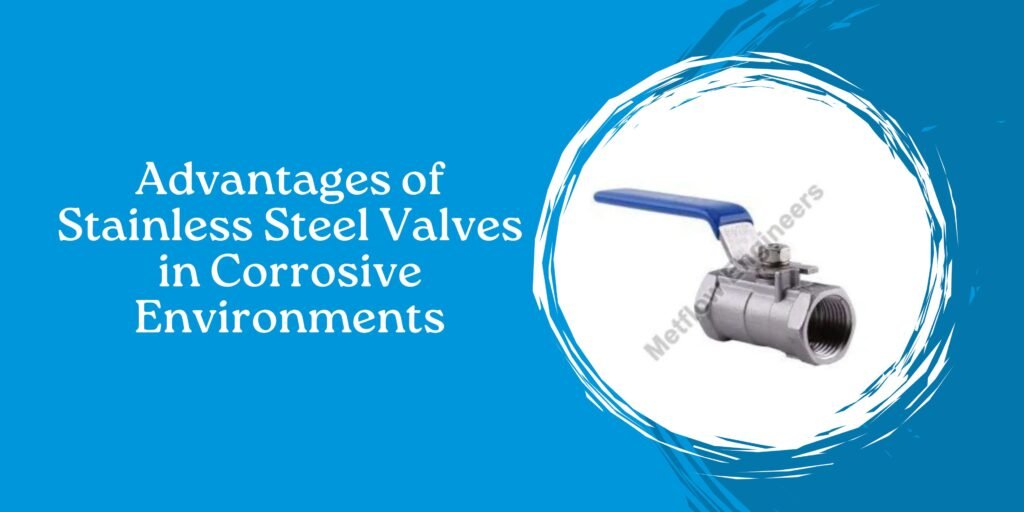
Stainless Steel Butterfly Valves
- Application: Ideal for large-diameter, low-pressure lines handling utility water, air, or less aggressive chemical slurries. Their lightweight design is cost-effective for large pipe sizes in these systems.
- We offer CI Wafer Type Butterfly Valves for water utilities and Stainless Steel Butterfly Valves for corrosive utility lines.
Globe and Gate Valves
- Application: Standard Globe and Gate Valves are restricted to clean, non-slurry chemical lines (e.g., steam, boiler feed, clean chemical transport). They must be specified in corrosion-resistant materials.
- The Stainless Steel Industrial Gate Valve and Stainless Steel WCB Globe Valve are essential for reliable isolation and throttling in clean steam or chemical utility applications.
3. Material Selection: SS 316 is Critical
In the Paper and Pulp environment, standard SS 304 is often insufficient due to the presence of chlorides (salts) and sulfur compounds used in the process.
- The Go-To Material: Stainless Steel 316 (SS 316) is highly recommended for all major process lines. The added Molybdenum in SS 316 provides superior resistance to pitting and crevice corrosion caused by chloride ions, a common failure mechanism in this industry.
4. Safety and System Longevity
A mill cannot afford unexpected valve failure. Ensuring safety and longevity involves:
- Protecting Pumps: Using robust Dual Plate Check Valves in Stainless Steel to protect high-volume pumps from catastrophic backflow during shutdowns.
- Filtering Contaminants: Utilizing Water SS 304 Y Type Strainer upstream of sensitive equipment (like pumps or flow meters) to capture tramp metal and debris before it can damage components.
Conclusion: Rely on Specialized Design
The high-abrasion and high-corrosion environment of the Paper and Pulp industry demands valves built with materials and designs that actively fight deterioration. By leveraging the shearing action of the Knife Edge Gate Valve and the chemical resistance of Stainless Steel, you ensure operational continuity and maximize the life cycle of your flow control assets.
Need a durable, reliable solution for your most challenging pulp or slurry lines?
Contact the experts at Metflow Engineers today for assistance in specifying corrosion-resistant, non-clogging valves.